

FROM THE FIELDS OF YAME: PROCESSING & STONE MILLING
In part one, we covered the shading and harvest; the weeks of careful preparation that bring the first flush of ichibancha leaves to their peak. This is what happens next.
ONLY THE YOUNGEST LEAVES
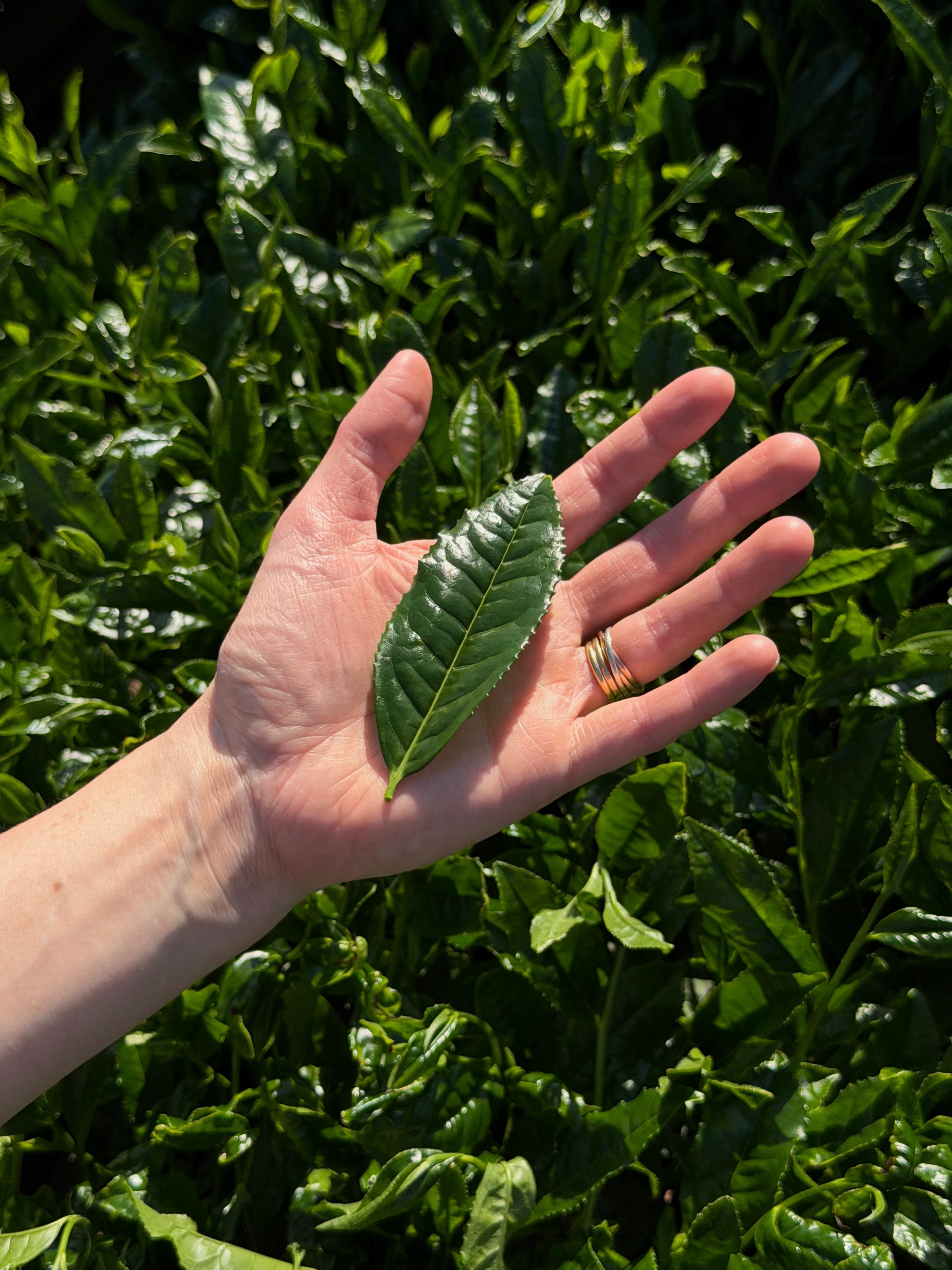
During the first harvest, only the youngest, topmost leaves are picked. These are the ones with the most vibrant colour, the highest concentration of L-theanine, and the sweetness and depth that make first harvest matcha what it is. Older leaves further down the plant don't make the cut.
It's selective by design. The quality of everything that follows depends on what goes in at this stage.

STEAMING: LOCKING EVERYTHING IN
The moment a leaf is picked, it begins to oxidise. That's why the journey from field to factory is measured in hours, not days.
On arrival, the leaves are steamed immediately. This single step stops oxidation, locks in that vivid green colour, preserves the fresh aroma, and protects the nutrients inside the leaf. It's what keeps matcha tasting like matcha, bright, grassy, clean, rather than something darker and more bitter.
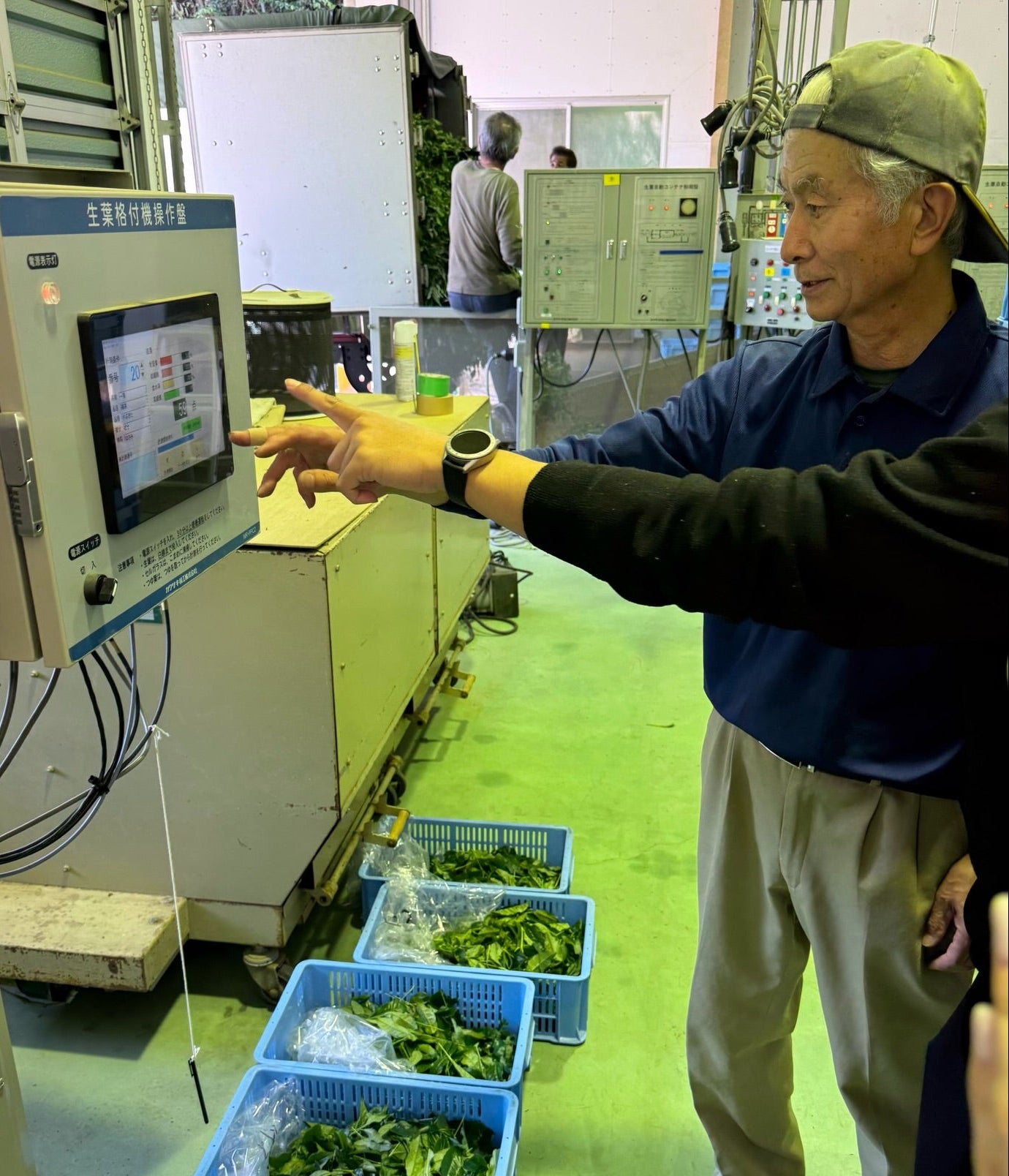
Being inside the factory during harvest is something else entirely. At peak season, lorries arrive every minute, small, medium, large, farmers driving straight from their fields with freshly harvested leaves. They tip the leaves directly into the start of the process. No waiting. No storing. Straight in. The entire regional harvest happens simultaneously, and this factory is where it all converges, every farmer working to the same window, all of it moving through the same process as fast as possible.
The machinery runs 24 hours a day for three months straight, a constant, industrial sound filling every corner of the building. The smell hits you first though. Intensely grassy and sweet, almost startling in its intensity. As the leaves are heated, it builds. At 300 degrees, the air itself feels alive with it. The heat is immense. The colour is everywhere, the leaves moving through the machinery, the pale green of the factory walls, the fine leaf matter settling across every surface. It's loud, hot, and overwhelming in the best sense.

DRYING: HOT, FAST & PRECISE
From steaming, straight into drying. The leaves are dried at around 300 degrees celsius - high heat, applied quickly and accurately. The goal is to draw out remaining moisture while preserving everything the earlier stages have worked to build: the colour, the flavour compounds, the nutrients.
It's a narrow window. Too little heat and moisture remains; too much and you start to lose what makes first harvest matcha exceptional. Getting this right every time is a matter of experience and precision in equal measure.
Once dried, the leaves go through sorting - and this is where the real detailed work happens. Stems and veins are carefully removed, leaving only the pure, flat leaf material. Stems and veins have a different texture and flavour profile to the leaf itself; leaving them in would compromise the quality of the final powder.
However, the stems don't go to waste. They're used to make Kukicha - Japanese twig tea - with its own distinct, mild flavour. Nothing from the first harvest is discarded.
THE TEA MASTER: PRESENT AT EVERY STAGE
Throughout the entire process, from the moment the leaves arrive at the factory to the moment tencha is ready, a tea master is present. Smelling, checking, evaluating. This isn't a ceremonial role. It's a practical one. At each stage, they are assessing whether what's in front of them meets the standard required to move forward. If it doesn't, it doesn't pass.
What remains after harvesting, steaming, drying and sorting is called tencha; the pure leaf, ready for grinding. It looks nothing like matcha yet: flat, dark green fragments of leaf, with none of the fine powder texture you're familiar with.
The entire process from fresh leaf to tencha takes one hour and ten minutes.

STONE MILLING: SLOW BY DESIGN
Tencha becomes matcha through one final stage: stone milling.
The grinding room sits away from the factory floor, a different experience altogether. Quieter, less intense; the grinders turn in unison, a slow, continuous mechanical rhythm you feel as much as hear. The matcha powder is everywhere, coating every surface in a fine layer of the most vivid, bright green. The air is thick with it. The smell is extraordinary: intensely sweet, pure matcha, more concentrated than anything you'd find in a tin. It hangs in the room. You carry it with you when you leave.
Traditional granite mills rotate slowly, grinding the tencha into an ultra-fine powder, just 10 to 15 microns. For context, a grain of table salt is around 400 microns. It takes one hour to produce 30 grams of matcha, not even enough for 20 servings.
The slowness is the point. Grinding generates heat, and heat is the enemy of matcha; it degrades flavour, colour, and the nutrients carefully preserved through every step before this one. Stone mills keep heat to a minimum.
One hour and ten minutes from fresh leaf to tencha. One hour to produce 30 grams of powder. Weeks of shading before that. A first harvest window of just a few weeks each spring.
This is the precision and craftsmanship behind every tin of JENKI matcha, and why the standards at every stage aren't something we're willing to compromise on.