

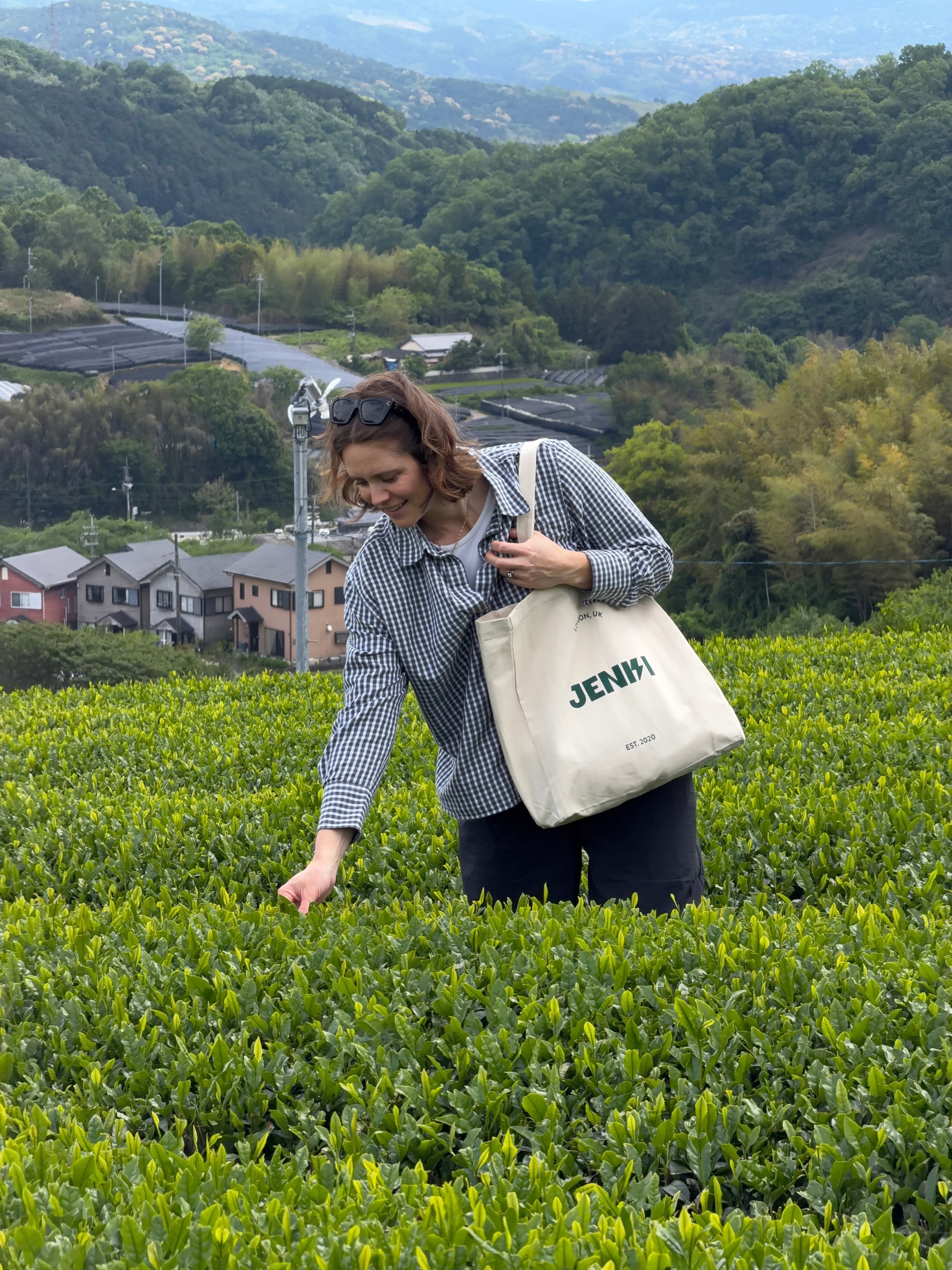
FROM THE FIELDS OF YAME: SHADING & HARVEST
We went back to Japan this season, this time to Yame; a tea-growing region in Fukuoka Prefecture with a history of producing exceptional matcha that goes back centuries.
WHAT WE SAW AT HARVEST
We went back to Japan this season, this time to Yame; a tea-growing region in Fukuoka Prefecture with a history of producing exceptional matcha that goes back centuries. Yame doesn't always get the same recognition as Uji, but among people who know tea, it's held in the same regard. The climate, the terrain, the depth of knowledge among the producers there; it produces matcha of genuine quality.
It's a region we know well. We've been working with producers in Yame for a long time. We source our single cultivar matcha, Saekari, from Yame, as well as our hojicha. This season we went back to see the shading and harvest for ourselves. What we saw was a process that takes skill, patience and care. But most of all, a renewed respect for the people that make this happen. A reminder of exactly why the standards we hold at JENKI, matter so much.

SHADING: THE STEP THAT MAKES MATCHA, MATCHA
Before a single leaf is picked, the fields are covered. Completely. Heavy black tarpaulin draped across every row of tea plants, left in place for up to three weeks. This is shading, one of the key things that separates matcha from other green teas, and one of the most labour-intensive parts of the whole process.
Covering a single field takes the entire farm team working together by hand. Every row has to be just right.
Why does shading matter so much?
Blocking direct sunlight triggers the plants to produce more chlorophyll and accumulate L-theanine, the amino acid that gives matcha its smooth, naturally sweet, mellow flavour. Less light means the plant works harder to capture what it can, building up the compounds that define high-quality matcha. More depth. More sweetness. That rich, vivid green colour, with less of the bitterness that comes from too much sun exposure.
When the covers come off, the leaves are ready. The signature taste of matcha - sweet, smooth, full of umami. It doesn't exist without those weeks in the shade.

ICHIBANCHA: UNDERSTANDING FIRST HARVEST
Tea plants can be harvested up to four times a year. Ichibancha - 番茶 - literally means "first tea." It's the very first flush of young leaves each spring, arriving late April through mid-May. After a full winter of the plant building nutrients, those early leaves emerge packed with amino acids and natural sweetness. Young, tender, and at their peak.
First harvest = more sweetness, less bitterness.
As the season goes on, sun exposure increases and the plant begins producing more of the compounds that bring astringency. Second and third harvests - known as nibancha and sanbancha - have a bolder, more punchy flavour that work well for cooking and baking, where that intensity holds up against heat and other ingredients. But for drinking, the first harvest produces a matcha that's sweeter, smoother, and far more complex.
If you're looking for a reliable indicator of quality matcha, harvest is one of the most important things to look for. You'll see a lot of brands use the term "ceremonial grade," but this isn't a regulated or standardised term. Any brand can use it, regardless of when their matcha was harvested or where it came from. First harvest is a far more meaningful measure.
It’s why any time you enjoy a drink from one of our matcha bars, or try JENKI at home, it will be first-harvest matcha.

THE HARVEST WINDOW IS SHORT
Once the first harvest window opens, it lasts a matter of weeks. Picked leaves begin to oxidise almost immediately, so everything moves quickly. The farmers harvest fast and carefully. At this point, speed and precision both matter.
The leaves go straight from field to factory. Here, they are steamed, dried, de-stemmed before being stone ground into a fine powder. We'll cover that part of the journey in the next journal post: how tencha is made, and why the grinding process matters as much as the harvest.